Opioids are the most dangerous drugs in existence
Opioids are the most dangerous drugs in existence
Opioids are the most dangerous drugs in existence
Client
Sundhedsstyrelsen
The Danish Health Authority was facing a growing problem: Opioids occupy a massive space on the political and healthcare agendas, in the media, but almost not at all in the consciousness of young people.
The task was therefore to prevent a problem before it becomes a real youth phenomenon and a potential health policy disaster.
Client
Sundhedsstyrelsen
The Danish Health Authority was facing a growing problem: Opioids occupy a massive space on the political and healthcare agendas, in the media, but almost not at all in the consciousness of young people.
The task was therefore to prevent a problem before it becomes a real youth phenomenon and a potential health policy disaster.
Client
Sundhedsstyrelsen
The Danish Health Authority was facing a growing problem: Opioids occupy a massive space on the political and healthcare agendas, in the media, but almost not at all in the consciousness of young people.
The task was therefore to prevent a problem before it becomes a real youth phenomenon and a potential health policy disaster.
Challenge
How do you make something dangerous when young people don't perceive it as dangerous at all?
For most young people, opioids are not a drug, but "just a pill". Something familiar, everyday, and harmless. The challenge was to break that misconception and shift opioids from medical safety to real risk, without at the same time making the drug bigger, more visible, or more relevant than it already is.
We had to reach young people between 15-20 years old before first use and make the risk real without making the drug relevant. A fine balance where the campaign must neither normalize, dramatize, nor create pluralistic ignorance.
The solution required an effort on young people's terms, based on their everyday lives, pressure, and need for coping.
In their language, on their platforms, and in a tone that empowers agency rather than pointing fingers.
Challenge
How do you make something dangerous when young people don't perceive it as dangerous at all?
For most young people, opioids are not a drug, but "just a pill". Something familiar, everyday, and harmless. The challenge was to break that misconception and shift opioids from medical safety to real risk, without at the same time making the drug bigger, more visible, or more relevant than it already is.
We had to reach young people between 15-20 years old before first use and make the risk real without making the drug relevant. A fine balance where the campaign must neither normalize, dramatize, nor create pluralistic ignorance.
The solution required an effort on young people's terms, based on their everyday lives, pressure, and need for coping.
In their language, on their platforms, and in a tone that empowers agency rather than pointing fingers.
How do you make something dangerous when young people don't perceive it as dangerous at all?
For most young people, opioids are not a drug, but "just a pill". Something familiar, everyday, and harmless. The challenge was to break that misconception and shift opioids from medical safety to real risk, without at the same time making the drug bigger, more visible, or more relevant than it already is.
We had to reach young people between 15-20 years old before first use and make the risk real without making the drug relevant. A fine balance where the campaign must neither normalize, dramatize, nor create pluralistic ignorance.
The solution required an effort on young people's terms, based on their everyday lives, pressure, and need for coping.
In their language, on their platforms, and in a tone that empowers agency rather than pointing fingers.
Solution
Together with the Danish Health Authority, we intervened right where the problem arises; in ignorance. We developed a campaign based on young people's own stories, fears, and reality, which makes the consequences of opioids concrete and present. By taking their greatest fear as a starting point and daring to get very close to the consequences, we made the risk tangible, for oneself and for those one cares about.
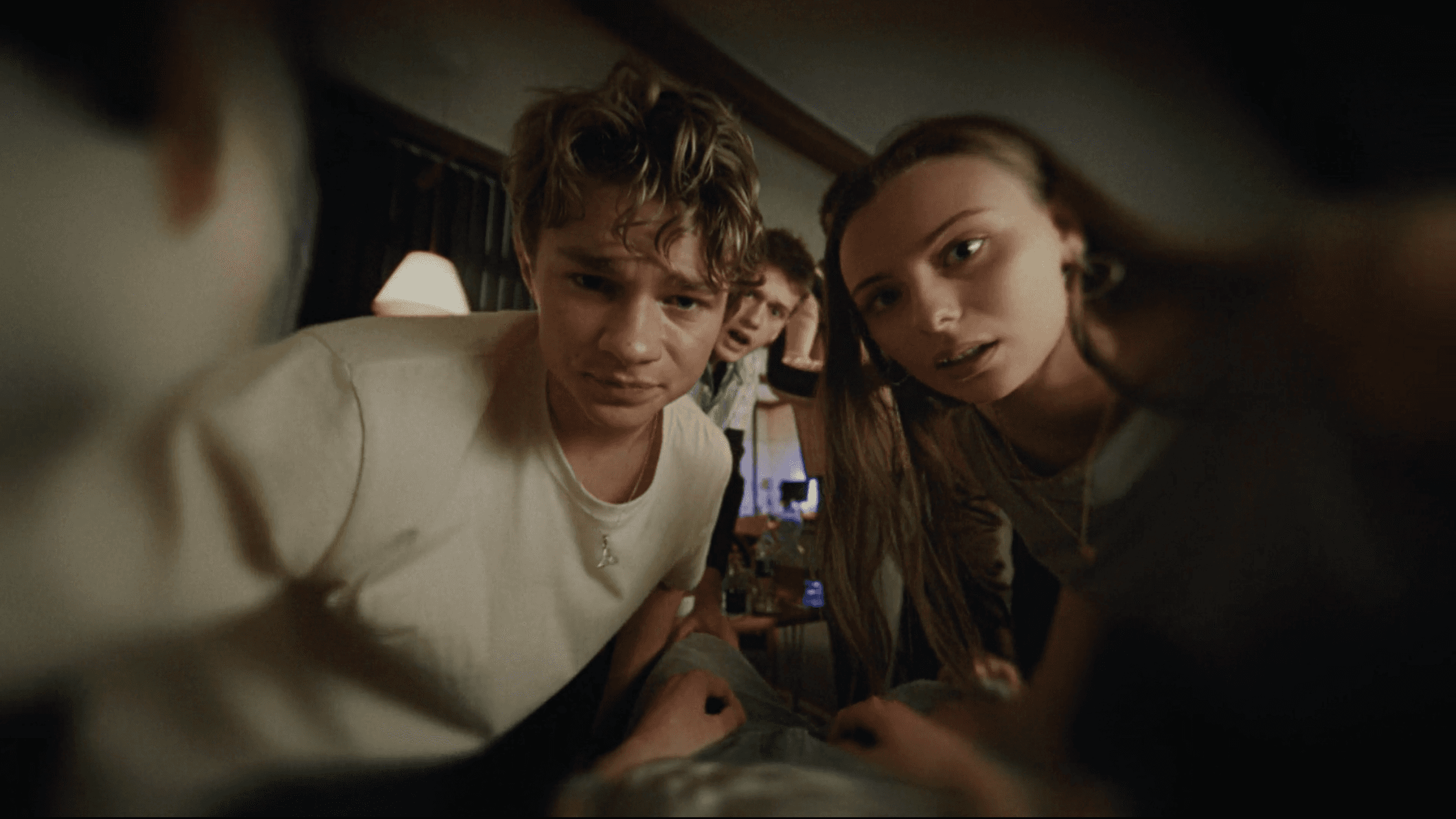
A strong hero film drives the campaign. Here, a recognizable party turns into a nightmare when an overdose occurs. Through a visual hook and an intense, sensory narrative, we feel the consequence where it hurts the most: with the friends and family left behind with the responsibility, panic, and powerlessness.
It is not a wagging finger, but an authority taking its role seriously. With a clear and uncompromising voice, we put into words what many do not know: Opioids can stop your breathing, and they are the most dangerous drugs in existence.
Solution
Together with the Danish Health Authority, we intervened right where the problem arises; in ignorance. We developed a campaign based on young people's own stories, fears, and reality, which makes the consequences of opioids concrete and present. By taking their greatest fear as a starting point and daring to get very close to the consequences, we made the risk tangible, for oneself and for those one cares about.
A strong hero film drives the campaign. Here, a recognizable party turns into a nightmare when an overdose occurs. Through a visual hook and an intense, sensory narrative, we feel the consequence where it hurts the most: with the friends and family left behind with the responsibility, panic, and powerlessness.
It is not a wagging finger, but an authority taking its role seriously. With a clear and uncompromising voice, we put into words what many do not know: Opioids can stop your breathing, and they are the most dangerous drugs in existence.
Together with the Danish Health Authority, we intervened right where the problem arises; in ignorance. We developed a campaign based on young people's own stories, fears, and reality, which makes the consequences of opioids concrete and present. By taking their greatest fear as a starting point and daring to get very close to the consequences, we made the risk tangible, for oneself and for those one cares about.
A strong hero film drives the campaign. Here, a recognizable party turns into a nightmare when an overdose occurs. Through a visual hook and an intense, sensory narrative, we feel the consequence where it hurts the most: with the friends and family left behind with the responsibility, panic, and powerlessness.
It is not a wagging finger, but an authority taking its role seriously. With a clear and uncompromising voice, we put into words what many do not know: Opioids can stop your breathing, and they are the most dangerous drugs in existence.
Contact us
Ida Graff Righolt
Client Lead & Head of Operations
Contact us
Ida Graff Righolt
Client Lead & Head of Operations
Contact us
Ida Graff Righolt
Client Lead & Head of Operations
Information
Information
Information