Forte Advice has been working for a long time to increase motivation among its employees. And in the film department, they have found a model that works.
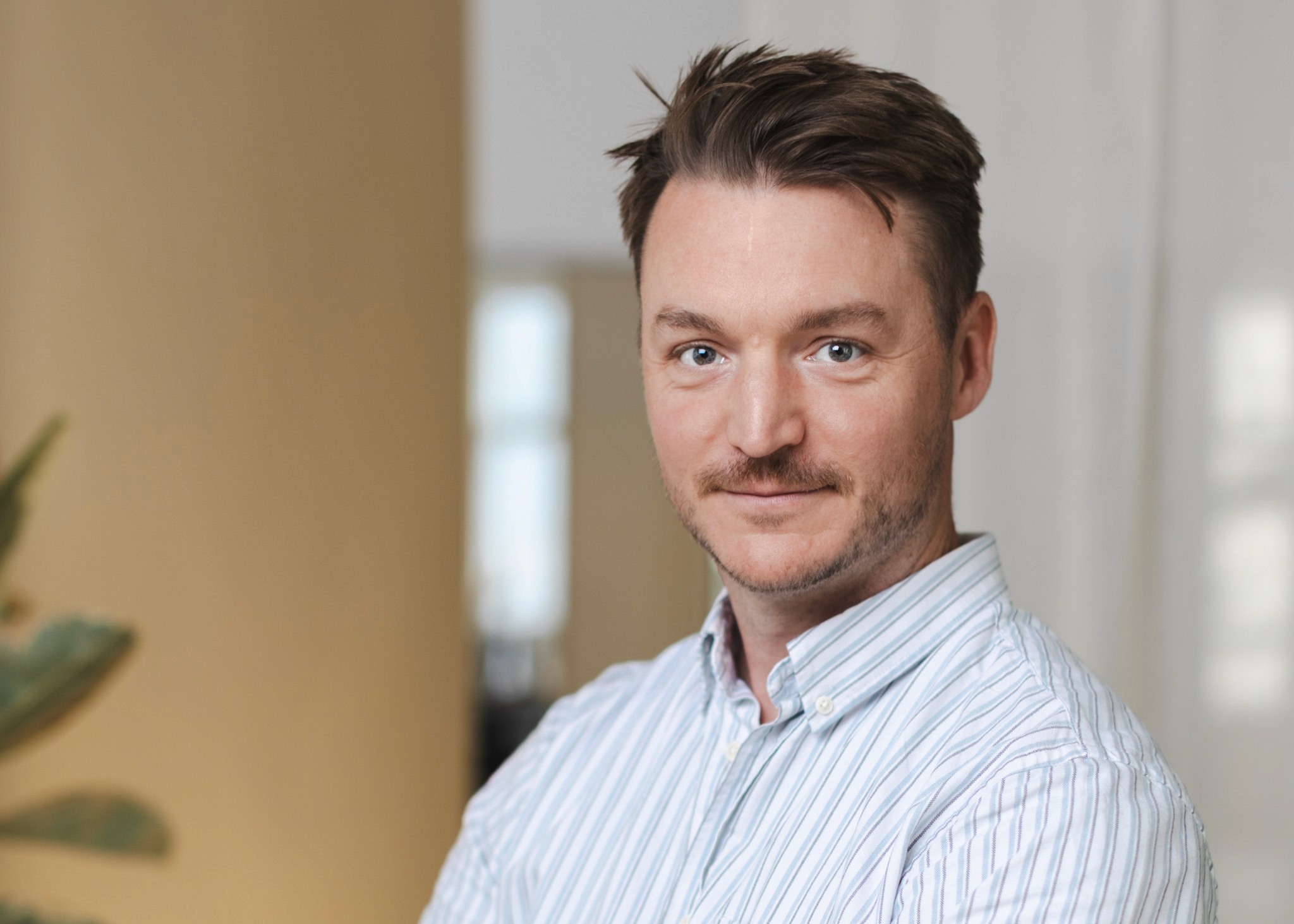
Anders Røge, director of film production at Forte Advice, tells Markedsføring that Forte Advice is successful with a model where the agency's film specialists can also participate in external projects for other agencies, production companies, and direct clients – without letting go of their permanent positions. Photo: PR
The agency Forte Advice has moved away from the classic model where creative employees solely produce hours for their own house.
This is written by Anders Røge, director of film production at Forte Advice, in an email to Markedsføring.
Forte Advice has thus been working for a long time on allowing the agency's film specialists to participate in external projects for other agencies, production companies, and direct clients – without letting go of their permanent positions.
This is a departure from traditional thinking, says Anders Røge, who points out that flexibility, professional development, and meaningful tasks today carry more weight than classic employee benefits.
"We have moved away from the idea that the value of an employee can be measured solely in internal hours," says Anders Røge, adding:
"All companies experience periods of high and low activity. When our employees can also work externally, both motivation and the business become more robust."
A freelance mindset
At Forte Advice, the departure from the traditional business model is not a question of structure, but of professionalism, says Anders Røge.
Because the cross-disciplinary opportunities leave room for a freelance mindset, where the individual actively seeks out inspiration, new skills, and relationships.
"The film industry has always been characterized by freelancers who see each other as colleagues across the board. It makes sense to transfer that logic to the agency and in-house world," says Anders Røge, elaborating:
"When we collaborate more across boundaries, employees develop faster, and this has a positive impact on the quality of the work we deliver."
"When employees see themselves in a more independent mindset, they actively seek out projects and relationships. It makes a noticeable difference for both the individual and the team when new knowledge and energy are brought back," says Anders Røge.
It is okay to reconsider
Allowing employees to work with both partners and potential competitors might initially seem risky.
But this does not deter Anders Røge, who points out "that openness often strengthens – rather than weakens – the organization."
"The question I get most often about our model is whether I am not afraid that employees will resign when they expand their network with competitors or partners," says Anders Røge, who has, however, been aware of the risk concerning the retention of talent:
"You must always do what you can to retain talent and culture-bearers. Experience so far shows that we are succeeding with this model too. If you think it is more fun to be somewhere else, that is also a clear indication of whether we internally are on the right track," he says.
The open way of working is closely linked to a culture where career development is not just about the next internal step, says Anders Røge.
"It is natural to reconsider your working life from time to time. We all do. If the inspiration stops in one place, you have to move on. By acknowledging this openly before it becomes a problem, we have created high well-being and low turnover," he says, adding:
"If we succeed in finding the balance between flexibility and fixed frameworks, it becomes an effective tool for both retention, professional development, and a more sustainable business."
The article was shared on 02/02-2026 in Dansk Markedsføring, and was written by Susanne Ingemann Terney: https://markedsforing.dk/artikler/nyheder/nye-tider-forte-advice-lejer-film-medarbejdere-ud/