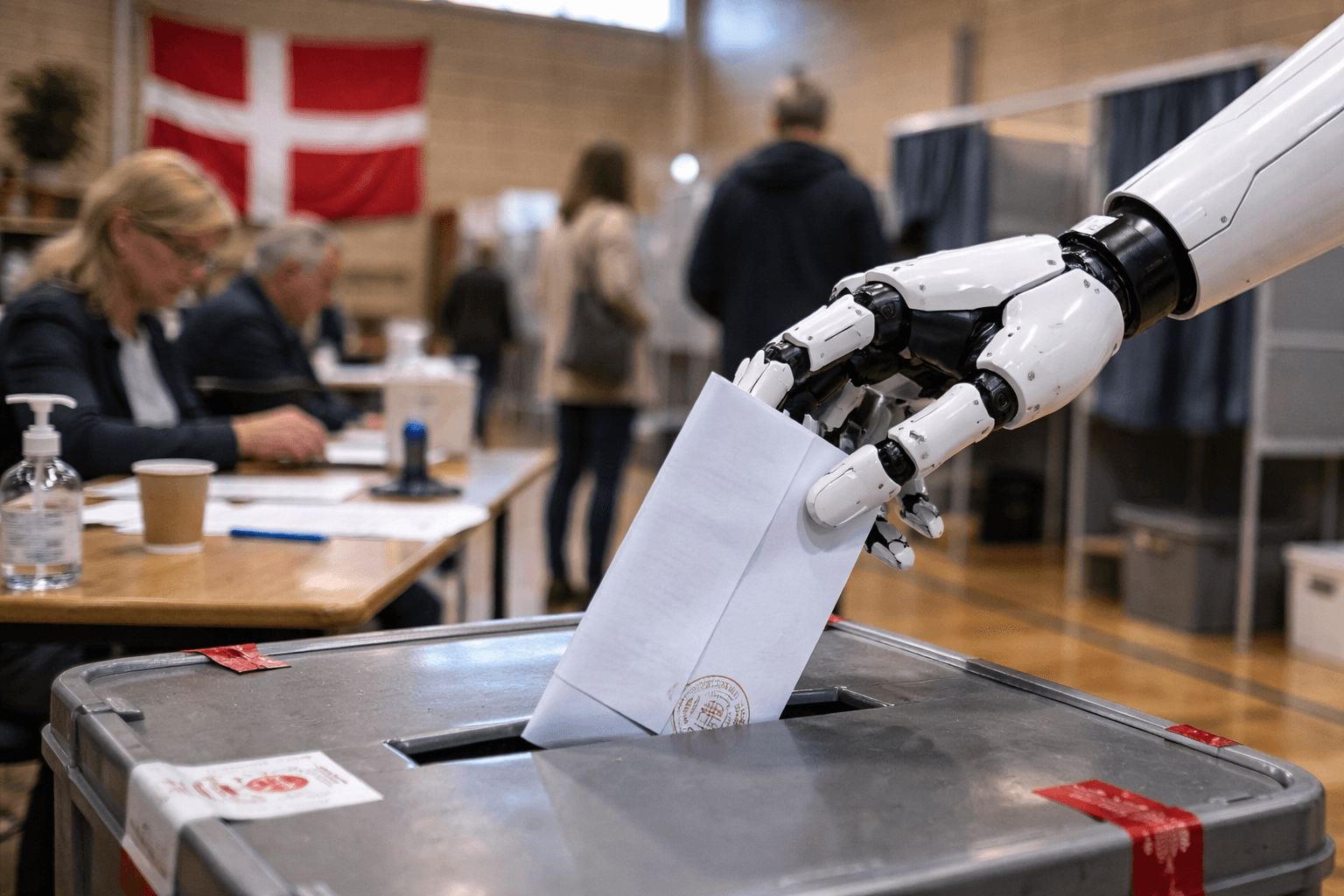

In the middle of an election campaign, where wealth tax, clean drinking water, and retirement age have stolen many headlines, AI is filling more and more of the debate on democracy and politics.
Can chatbots influence voters? Can algorithms change the political conversation? And will AI play a role when Danes have to decide where to cast their vote?
Recently, TV2 tested ChatGPT in their own candidate test, for example, where the chatbot ended up with a clear match with the Social Liberal Party (Radikale Venstre) – without further input.
Although rules and platform restrictions have narrowed the possibilities for paid political advertising, social media still plays a central role in the election campaign through organic content, visibility, and ongoing contact with voters. According to Markedsføring, one in four politicians is now on TikTok during the election campaign. This is presumably the first general election campaign where AI has truly entered the field.
Merete Arentoft, Managing Director & Partner at Forte Advice, notes this:
“With AI, voters encounter politics in new ways all the time. From AI videos and chatbot recommendations to deepfakes and digital campaign assistants. AI is becoming an increasingly integrated part of the digital public sphere, and therefore it is also important to understand how technology affects both information, debate, and political communication.”
But AI's significance for democracy is not just about the election campaign itself.
Algorithms as new democratic infrastructure
Algorithms already play a major role in what information we encounter online – from social media to search engines. And as AI-based tools become a more common gateway to information, they can also influence how political opinions are formed.
According to Jesper Nørding Pedersen, Managing Director & Partner at Forte Advice, it is therefore important to view AI in a more long-term perspective.
"Generative AI is increasingly our gateway to knowledge with direct significance for democracy. Politicians, organizations, and businesses must address how AI is used to obtain knowledge about political topics. Analyses show that AI is increasingly becoming the Danes' gateway to knowledge. A study from IDA shows that 74% use AI for information search and summarization. This means that knowledge is increasingly being interpreted and disseminated through AI systems rather than through direct sources. And many times, the user does not even know that it is an AI they are interacting with.”
This also means that voters, organizations, and political actors alike must increasingly address how the technology is used in a democratic context. Therefore, the question is perhaps not just what role AI plays in the upcoming election. But what role the technology will play in the next one.


