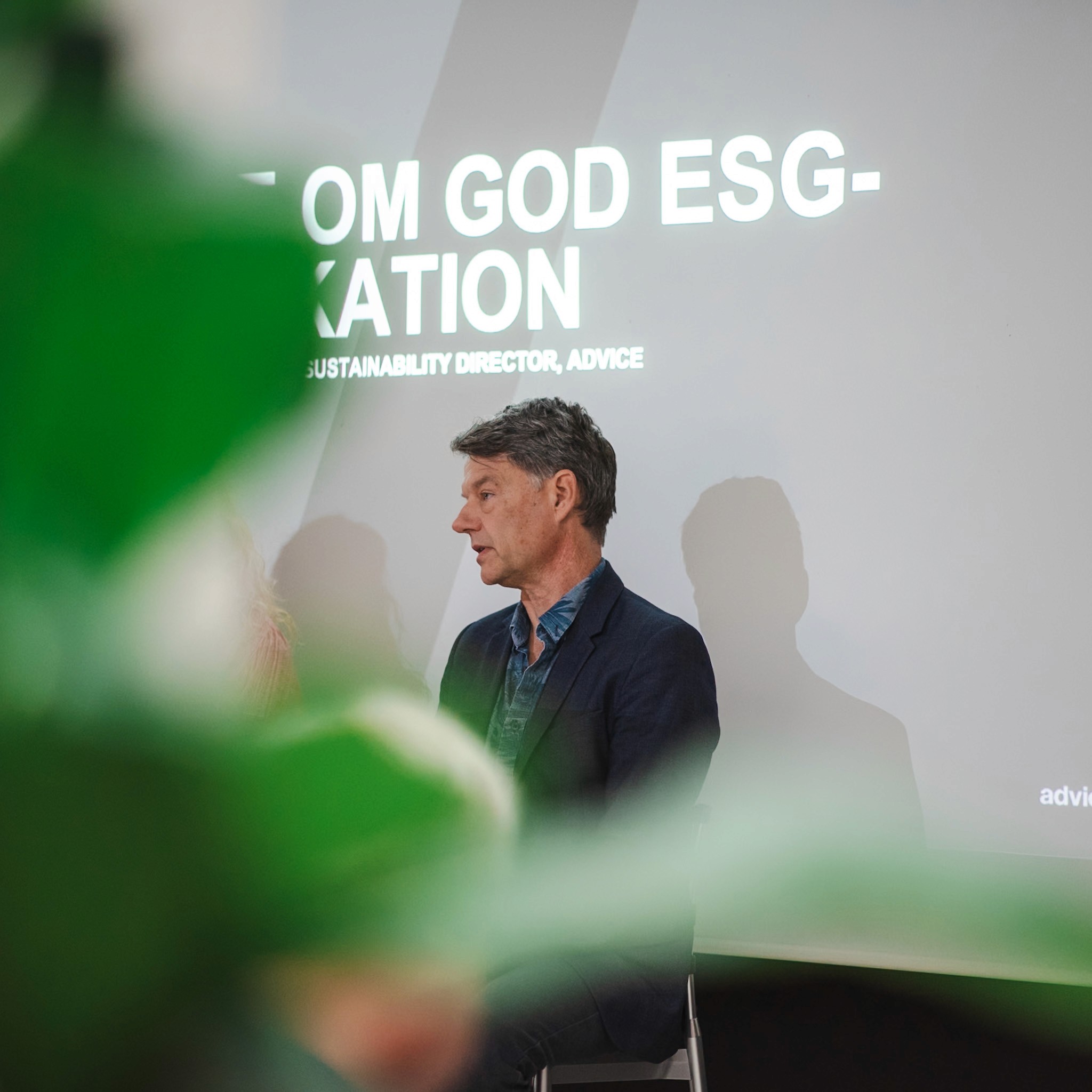
Wars, geopolitical instability, climate crisis, and unpredictable American leadership have shaken the foundation that companies have traditionally stood on. This reality not only changes the framework for doing business – it also alters the conversation about responsibility.
For years, ESG has been the obvious framework for discussing companies' roles in society. A way to express ambitions regarding sustainability, ethics, and social justice. But today, this conversation is undergoing change. The challenges that the ESG agenda addresses have not disappeared – quite the contrary. Particularly, the climate crisis is worse than ever. However, in the USA, ESG has become a point of conflict in the culture wars, and in Europe, it is also beginning to rub many the wrong way. Not because the goals are wrong – but because many ordinary people feel that the way we discuss them has lost connection to reality. Where does that leave the companies and organizations that still wish to show they take responsibility?
ESG has become the ultimate symbol that the world is more polarized than ever; divided into a Western upper class, which holds the right attitudes and worldviews, and the remaining parts of the global population, who do not benefit from the surplus society's advantages.
The classic ESG messages are, therefore, in danger of being perceived as something for the few. For those who have surplus and value-based preferences – but not necessarily for those for whom stable economy, security, and a good job are the top priority. And that is a real challenge. For when ESG messages begin to sound like moral instructions from above, rather than concrete improvements in people's lives, they lose both effect and appeal. So how do we talk about ESG and responsibility in a reality where ideals meet resistance?
We need to move away from the moralizing and towards the meaningful. Away from abstract purposes and towards concrete value. If we want to retain and develop ESG as an agenda, we need to start seeing communication as a real tool for change – not just a channel for expectation management or branding.
This requires us to be sharper about what we are actually saying and to whom we are saying it. To make a difference, the ESG narratives must be relevant to the individual person, the individual company, or the local community. It is no longer about promising the world change – but about creating meaning where people live their lives.
At the same time, we must hold on to the fact that values do not only apply when it is easy. Precisely when ESG is debated, and when others roll back their ambitions, a space emerges for those who maintain their direction. Standing firm in resistance not only creates credibility – it also expands the scope for long-term change.
We stand at a crossroads. If we cannot communicate responsibility in a way that connects to the reality people experience, we leave a void. And in that void, populism grows. When people do not feel seen or included in the sustainable agenda, they find other narratives that promise closeness, security, and empowerment – but without the considerations of community.
Therefore, it is crucial that companies and communicators take on the task of translating responsibility into something that can be felt. It is not just well-communicated ESG that will save the agenda. It is empathetic, concrete, and human responsibility that will save trust.
If we succeed in making ESG relevant to the individual person, it could, in a hopeful moment during the summer warmth, be the way out of the suffocating grip of populism on humanity.
By Anna Louise Henrichsen, Partner & Director, Public Affairs & Sustainability, Advice, and Anders Elleby Nielsen, Director, Corporate Communication, Advice
The column was shared in BØRSEN on 06/09: READ IT HERE


